
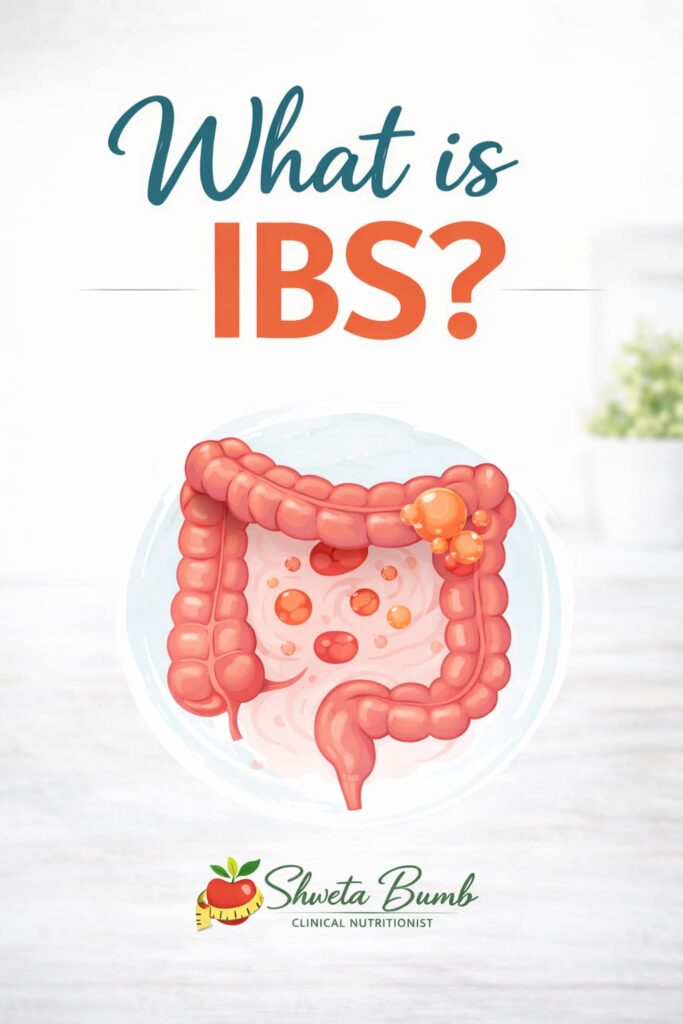
IBS, or Irritable Bowel Syndrome, is a common functional digestive disorder that affects how the gut works. In IBS, the structure of the intestine is normal, but its functioning is disturbed, leading to uncomfortable digestive symptoms.
IBS can significantly affect daily life, but the good news is that it can be managed effectively with the right lifestyle changes and personalized nutrition.
Common Symptoms of IBS–
- Abdominal pain or cramps
- Bloating and excessive gas
- Constipation
- Diarrhea
- Alternating constipation and diarrhea
- Feeling of incomplete bowel emptying
What Causes IBS?
- Poor gut motility
- Food intolerances
- Stress and anxiety
- Hormonal changes
- Gut sensitivity
- Imbalance in gut bacteria
Can IBS Be Treated with Lifestyle Changes and Right Nutrition?
Yes—absolutely!
Although IBS cannot be “cured” permanently, symptoms can be greatly reduced and controlled with the right approach.
Key areas of management include:
- Personalized Nutrition
Identifying trigger foods
Improving fiber intake (as per tolerance)
Eating regular, balanced meals - Lifestyle Modifications
Managing stress through relaxation techniques
Improving sleep quality
Regular physical activity
Mindful eating habits - Gut-Friendly Habits
Proper hydration
Eating slowly and chewing food well
Avoiding frequent junk and processed foods
REMEMBER: Every Body Is Unique
IBS symptoms and triggers are different for everyone. What works for one person may not work for another.
That’s why personalized diet planning and lifestyle guidance are essential for long-term relief.